3rd INTERNATIONAL CONFERENCE IN MARINE BIOTECHNOLOGY 2026

PLENARY SPEAKERS
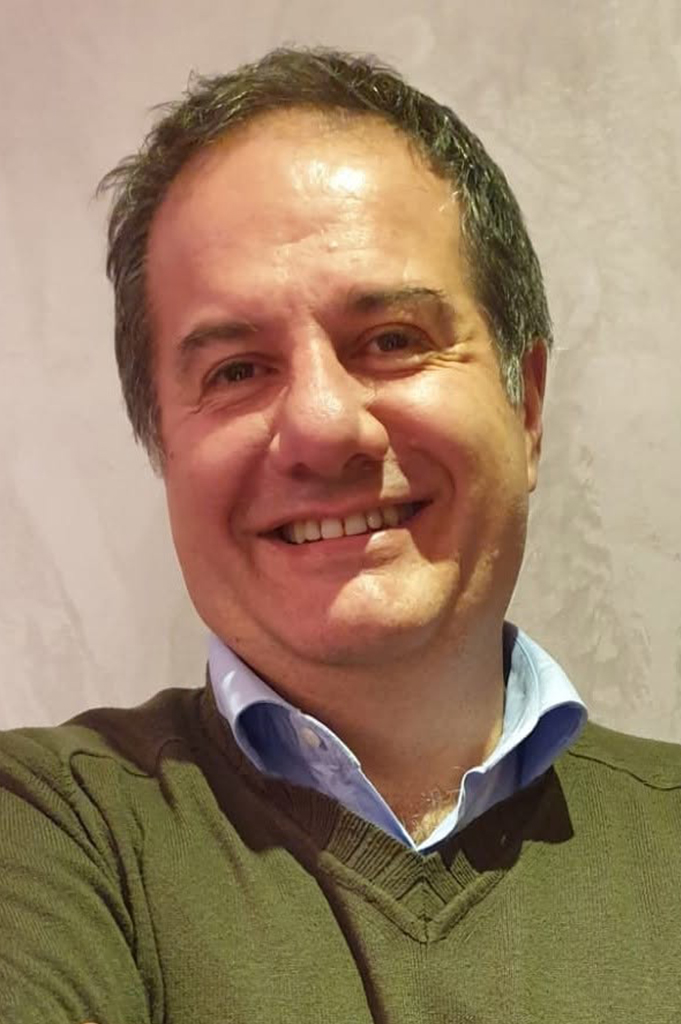
Prof. Dr. Gianluca Sara
University of Palermo, Italy
gianluca.sara@unipa.it
Monitoring Ecosystems: Integrating New Technologies to Prevent Biodiversity Loss and Enhance Habitat Restoration
Gianluca Sarà*, Maria Bosch-Belmar and Francesco Paolo Mancuso
aDepartment of Earth and Marine Sciences, Laboratory of Ecology, University of Palermo, Viale delle Scienze, Edificio 16, 90128 Palermo, Italay
Effective ecosystem monitoring is becoming a central requirement for preventing biodiversity loss and guiding habitat restoration under accelerating climate and anthropogenic pressures. Traditional monitoring approaches, although essential for long-term assessment, often lack the spatial resolution, temporal frequency and analytical capacity needed to detect rapid ecological change before degradation becomes irreversible. This contribution discusses how new technologies can transform monitoring from a descriptive activity into an early-warning and decision-support system. We focus on the integration of autonomous sensors, smart buoys, satellite and drone observations, underwater imaging, acoustic monitoring, Internet of Underwater Things architectures and artificial intelligence. These tools can generate continuous, high-resolution environmental and biological data, while machine learning can support species identification, habitat mapping, anomaly detection and the interpretation of large marine datasets. Particular attention is given to biologically meaningful indicators linking environmental variability with ecosystem functioning, habitat condition and restoration success. Case studies will include the SeaSentinel scientific buoy and dashboard developed at the University of Palermo, designed to provide real-time information on habitat health, ecosystem services and environmental variability, together with the Mobile Ocean Observatories concept, which transforms fishing, commercial and recreational vessels into distributed marine observing platforms integrated with AI-driven decision-support and early-warning systems. By combining technological innovation, ecological theory and adaptive management, next-generation monitoring can improve the timeliness of conservation responses, support restoration planning and help align management actions with the fast dynamics of ecosystem change.
Keywords. ecosystem monitoring; artificial intelligence; biodiversity loss; habitat restoration; marine technologies